

Here’s All The Information You Need To Quickly and Easily Start An Algae Biorefinery or Microfarm Anytime, Anywhere, For Biofuels, Bio-Animal Feed, Or Bio Fertilizer…

How To Make Money With Algae Biorefineries
In Algae Biorefineries and Micro Farms, we dive deep into world of algae, it’s products, it’s co products, and more specifically how YOU can make money from the coming “Algae Revolution.” Making algae biofuels is only scratching the surface of this remarkable organism. If you’re serious about making money with algae, then this book is for you.
Perhaps no other opportunity this century has offered the potential of algae-based products. Algae is a basic building block of life itself, therefore, many other products we know today spring from it. In this one-of-a-kind book, we explore the many products, and the many pathways to producing those products.
No other book on the market explores these issues, or details the methods and techniques involved in bringing this “super material” to market.
Once again, David Sieg has composed and excellent guide, whether for fuel, food, animal feed, fertilizer, or even cosmetics. He covers the range from home use to large-scale commercial systems, from a distributed and survival perspective; yet practical enough for modern implementation — a hallmark of true sustainable principles.
We’ll be consulting this guide in the Safe Haven Villages (.org) intention community I’m involved with. In a day when central authority is growing more tenuous, the ability to do things in a distributed model is growing increasingly vital; and it just makes more sense from a seventh-generation sustainability point of view, while still being profitable in today’s economy.
In fact you might consider this as a career that will not only survive the downturn, but help you and many others make it through the worst of times to come; all while pioneering a future industry.
Sterling D. Allan, CEO, New Energy Congress,Pure Energy Systems Network


Why should you invest in this report?
- Written for the layman, or non-technical person.
- The report highlights different, inexpensive methods of building algae biorefineries having a focus on bio fuels and bio-energy.
- It provides extensive details on every aspect of building algae microfarms
- It presents numerousexamples of what the pioneers in the field are doing in the algae energy domain.
- It showcases methods of building low-cost algae biorefineries.
- It highlights ways to build commercial algae microfarms economically.
- It provides current and future research areas in algae co products
- It provides extensive knowledge on commercial algae biorefineries…what works, and what doesn’t.
- It provides commercial research, enabling students, teachers, and researchers to quickly and easily get up to speed.
- It provides details for alternative algae products not just biodiesel – from algae.
Hi David,
| Yes it does make sense and is very clear. I am a Professor of Chemical and Biological Engineering specialized in chemical and biochemical reactors, I have over 400 papers, 4 patents and 4 books…I like your simple books to the ordinary person |
Prof.Dr.Said Elnashaie New Mexico Tech. University,
Everything You Always Wanted To Know About Algae Biorefineries Microfarms (But Didn’t Know Where To Ask…)

Why Algae Microfarms now?
The World is Ready for a SolutionAgricultural Land Availability IssuesGlobal Warming IssuesEnergy SecurityPotential Depletion of FisheriesWhy is Now the Time to Pursue Algae Biorefinery?Consumer Interest:Changes in NatureChanges in TechnologyAlgae biorefineries Competitive Advantages

Chapter Two: The Basics of Micro Algae Micro Farming and Bio-refineries
A SWOT Analysis of BiorefineriesWhat is a “Biorefinery?Understanding the Biorefinery concept.Algae MicrofarmsAn Algae Microfarm Case StudyA Biofuels Case StudyA Developing World Case StudyA Village Scale Case StudyA Government Scale Case study

Chapter Three: Potential Challenges With Micro Algae Farms
Algae Biofuels Legal Aspects
Possible Issues with Independent Contractors.
When the technology belongs to you and you wish to sell or license it’s use.
Site Security
Environmental Issues
David really knows what he’s talking about when it comes to biodiesel. And his new book “Building Open Ponds” shows it… it’s 277 pages jam packed with tons of great information from growing algae in an old bathtub to large scale algae farms. Great details and pictures to make it as easy as pie even for the novice. David really goes the whole nine yards when he writes a book!
Bill AndersonAuthor, www.electricitybook.com
How To Finance Your Project
Some different types of financing
Kinds of Investors
Locating Equity Resources
Debt Funding
Loan Guarantees
Tax Incentives as well as other Tax Considerations
Government Grants and Incentives
Other Programs Available
Algae Biofuel Grants

Chapter Five: Planning
Types of Biorefineries
Designing your Bio-refinery
Building a Bio-refinery
Site requirements for algal biorefinery
Co Location with Advantageous Partners
Integration with Water Treatment Facilities
Wastewater Treatment and Recycling Uses
Personnel Considerations
Necessary Algal Characteristics
Strain selection
Commercial Culture Labs and Collections
Natural Habitats
Disadvantages to Co-Location with Stationary Industrial CO2 Source
Algae production Costs and Uncertainties
Realistic Costs Associated with Biorefineries
Co location with CO2 emitting Sources
Conclusions

Chapter Six: Algae Products and Co-Products
Commercial Products from Microalgae and Cyanobacteria Algae Based BiofuelBiodieselBioethanolBiogas or BiomethaneBiobuthanolBiohydrogenBioelectricity Gasification TarAlgae CoalChallenges to Algae to Biofuel CommercializationFeed stock ChallengesConversion ChallengesFuel Conversion:
Co-Products:
Infrastructure ChallengesDistribution and UtilizationResources and Siting.Algae-based products for human consumptionAlgae as a Staple foodAlgae and the Food IndustryHealth foods and pharmaceuticalsAquaculture:Animal Feed Additive:NutraceuticalsAstaxanthinOmega-3 OilsAnti-OxidantsPharmaceutical Uses of AlgaeCosmeticsAlgae FertilizersOther Specialty ProductsPaperBio ConcreteBio PlasticsFine ChemicalsLow-value CoproductsCommercial Products from Macroalgae.Other macroalgal foods.CO2 mitigationCarbon sequestrationCarbon tradingConclusions

Chapter Seven: Co-Product Recovery
Potential Options for the Recovery of Co-products
Maximum Energy Recovery from the Lipid-Extracted Biomass,
Recovery of Protein for Use in Food and Feed
Technically feasible algal bioenergy co-production concepts
Economic viability of bioenergy co-production from algae
References

Chapter Eight: Algae Microfarm Production
Introduction:Proof of Concept IntroductionPilot Scale Introduction:Production Scale Introduction:Proof of ConceptObtaining the algae strain you’re interested in.Native AlgaeCommercial Algae StrainsMaximizing GrowthSmall scale harvestingProcessingPilot ScaleOpen pondsClosed PondsPhotobioreactors (PBR) and BioreactorsProduction ScaleOpen PondsWater ResourcesCarbonationMixing SystemsOther FactorsClosed Ponds.PhotobioreactorsHarvestingScreeningFiltrationFiltration and Screening DevicesPressure FiltersVacuum FiltersRotary vacuum filterMicro StrainersMagnetic SeparationCentrifugationTubular centrifugeImperforate basket centrifugeFlocculation or sedimentationFlotationFlocculation and Dissolved Air FlotationElectroflotationOther Harvesting TechniquesDryingRotary DryersFlash DryingSpray DryingSun DryingSummary of harvesting methodsOil Extraction TechnologiesMechanical Disruption (i.e., Cell Rupture)Mechanical ExpulsionSolvent ExtractionSupercritical Fluid ExtractionOsmotic ShockSonication and/or UltrasoundOrganic and/or Chemical Co-solvent MixturesSubcritical Water ExtractionChallenges Associated with Production ScaleAvoiding contaminationAdding Co2Constant inoculationStressing algaeThe problem with yield extrapolationHydrocracking algae biofuelsGMO algaeThe Ideal Algae for Biofuels

Chapter 9: Resources, Equipment and Vendors:
Buying the algae strain you’re interested in.
In North AmericaMexicoEuropeCzech RepublicFranceGermanyAustraliaJapan
Algae Biofuels Contractors and Equipment Vendors
Open PondsPond Liners and pond equipmentPhotobioreactorsAcrylic tubing for bioreactorsPlastic Tanks for PBRSPlastic (PVC) pipe fittingsLED LightingSteel mesh filter clothOil presses and extrudersReferences

Chapter 10: Marketing Algae Products
Marketing Algae Based Products.
Marketing to Corporations: Marketing to ConsumersMarketing Challenges of Algae Directly to ConsumersAlgae, Junk food, and BeerAlgae based Junk Food (except it isn’t)Algae based beerAlgae CosmeticsCreate your own productBringing a Food Product to MarketDeveloping and Marketing an Algae Cosmetic Product

Chapter 11: Case Studies
Aurora BiofuelsPhycal, Inc.Amyris BiofuelsSapphire EnergySolazyme, Inc.SeambioticAlgae-Tec LimitedAlgae Floating Systems, Inc.Alpha To Omega HoldingsAlgenol Biofuels Inc.CereplastSolix BioSystems, IncSynthetic Genomics IncDao Energy, LLCKai BioenergLive Fuels, Inc.Pond Biofuels, Inc.Bioprocess Algae, LLC
Algae Biorefineries and Microfarms: What You’ll Get
Over 400 pages, full color paperback for your library
11 chapters of jam-packed, no fluff, no BS info
Full Color
Perfect bound
10 valuable bonus reports Instant download of bonus material.
1164 Pages of bonus material in .pdf format

One of the most comprehensive treatments of all aspects of a commercial algae microfarms available anywhere, including equipment lists and cost breakdowns.
About the Author
In 1995, as one of the first Americans to reenter Vietnam after diplomatic relations were restored, David Sieg, while teaching at a university, started making biofuels, then later, algae biodiesel.
With the oil embargo still in effect, Mr. Sieg used his knowledge of biofuels to run the university generators to get lights and air conditioning. Seeing how many people could benefit, he later opened a algae bio fuels consulting business in Vietnam, and Thailand.
In 2008, knowing the secretive nature of the algae biodiesel industry and the lack of real world info, he created making-biodiesel-books.com to share his knowledge. Here you’ll find real world applications, “How-To” knowledge you won’t find anywhere else.
Other sites might tell you WHAT to do, but none of them tell you HOW to do it. We do.


Bonus Section, Time to Over Deliver!
Bonus Material
1164 pages of in-depth Algae Biorefinery Operations and Micro Farm Detail You’ve Come To Expect
Algae Based Biofuels: Applications and Co Products (117 pages)
A comprehensive paper by the Environment and Natural Resource Group exploring the different applications and co products available using micro algae.
Algae Biofuels Roadmap: (140 pages)
One of the most valuable reports published since the Aquatic Species Program and the detailed background of many of the concepts presented in the main book itself. This is a MUST-HAVE report that belongs on any serious algaepreneurs bookshelf.
A comprehensive paper by the Environment and Natural Resource Group exploring the different applications and co products available using micro algae.
New Developments in Micro Algae Farming for Food and Biofuels (44 pages)
A Harvard University document outlining the advantages and disadvantages which algae farmers will be faced with currently as well as in the future.

Algae Biodiesel: A Feasibility Report (43 pages)
An in-depth report covering the feasibility, as well as the pitfalls of algae biodiesel production.
Design and Analysis of “‘ Microalgal Open Pond Systems for the Purpose of Producing Fuels A Subcontractors Report (231 pages)
In-depth and to the point, this report covers it all.

A Realistic Technology and Engineering Assessment of Algae Biofuel production (178 pages
In-depth and detailed, this report lays bear the bones of all aspects of engineering an algae biofuels facility. Including various options and techniques available.
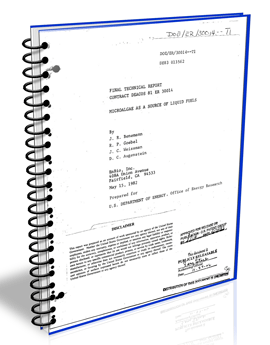
Microalgae as a Source of Liquid Biofuels (229 pages)
By John Benemann, the “grandfather” of algae biofuels, and one of the founding members of NREL’s Aquatic Species Program. This report prepared for Enbio, Inc, is one of the most detailed, and through reports found anywhere

Renewable Diesel from Algal Lipids: An Integrated Baseline for Cost, Emissions, and Resource Potential (89 pages)
From the NREL, this report was commissioned by the Dept. of Energy and provides a realistic baseline of costs associated with a micro algae project.

Genetic Engineering of Algae for Biofuel Production (44 pages)
An extremely hard to find report. Many people have asked for this and now it’s yours.
Production of Gasoline and Diesel from algae Biomass via Fast Pyrolysis, Hydrotreating and Hydrocracking (76 pages)
Another hard to find report outlining what it takes to create advanced fuels such as gasoline and jet fuels.
Everything is 100% Take-It-To-The-Bank Guaranteed
 All the best to you and your family,David Siegwww.making-biodiesel-books.comPS…In a world-wide climate of massive unemployment, “down-sizing,” “right-sizing,” and outsourcing, few opportunities exist today to create a lasting income that can serve your family for generations, help the global village, while at the same time, contribute to saving the environment. The Algae Revolution presents just such an opportunity. Can you afford to pass this opportunity up?Disclaimer: All testimonials and comments are unpaid. These comments reflect the viewpoints and/or experiences of a people named and you may, or may not have similar results. * Every effort has been made to accurately represent this product and its potential. Please remember that each individual’s success depends on his or her background, dedication, desire and motivation. As with any endeavor, there is no certain guarantee of success. Please observe all laws in your local area. Legal Information Disclaimer | Terms Of Service |Refund Policy| Privacy Notice